
The Best AI Scribe for Physiotherapists in 2026
Key takeaways
- Hanah is overall the most complete and fastest AI scribe for physiotherapy. It captured 93.7% of required clinical details in our benchmark, compared with Preve's 72.2% and Heidi's 91.4%.
- Our testing is open to inspection: recordings, drafts and grading reasons are published. Hanah had no major hallucination flags in its 13 scored notes; minor flags and omissions remain visible, and every draft needs review.
- Hanah includes home exercise programs and a patient-facing app branded with your clinic. Patients can follow their agreed home program between appointments, while you manage the notes, letters and practice software workflow.
- For Australian clinics, Hanah costs A$100 per practitioner per month, or A$80 per month billed annually. It works with Cliniko, Halaxy, Nookal and Zanda.
- Read the test conditions with the results. The corpus spans several professions, with differences in note formats and output availability disclosed below.
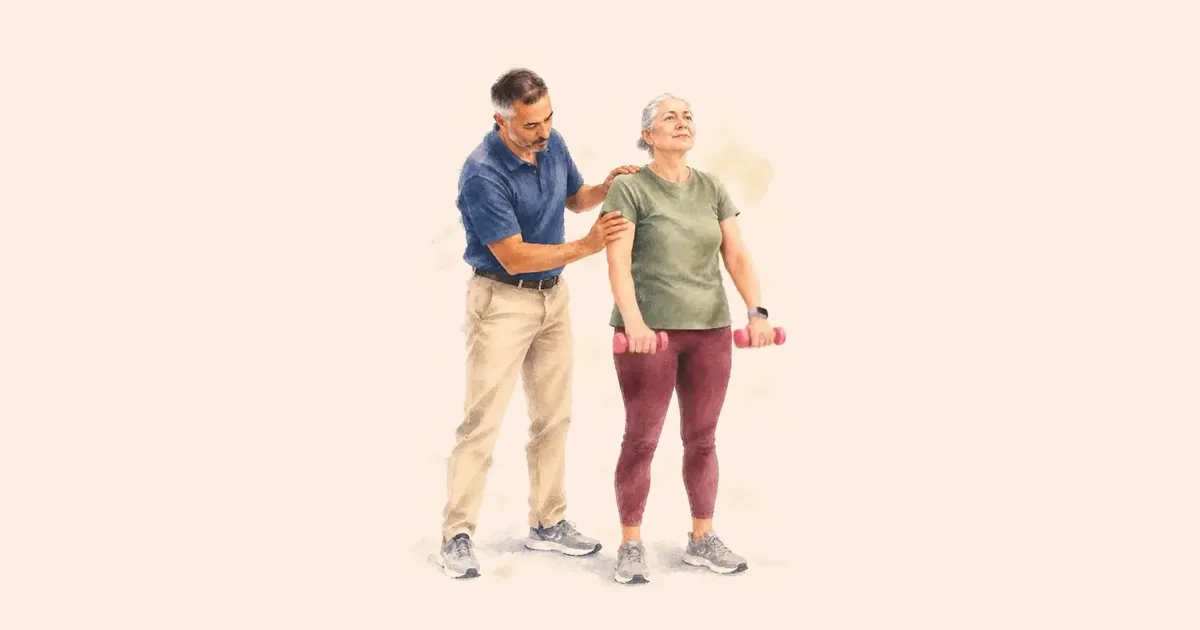
The best AI scribe for physios should preserve the findings you actually measured, keep your clinical reasoning intact and help you finish the work around the appointment. That means the SOAP note, the referral letter and the home program you agreed with the patient.
Our recommendation is Hanah. In our October 2026 comparison of seven AI scribes, Hanah captured the highest share of required clinical details and had the lowest rate of major hallucination flags. Below, we compare it with Preve, Heidi, Lyrebird, Freed, CliniScripts and PatientNotes, including the physiotherapy cases behind the headline numbers.
You can check the evidence behind our recommendation. We publish the test recordings, reference transcripts, each product's captured outputs and the reasons behind the grades. That includes Hanah's omissions, minor hallucination flags and cases where a competitor did better. Transparent testing means showing you enough to question the result as well as understand it.
Written by Ahmed. Benchmark run: 6 October 2026. Product and pricing pages checked: 15 October 2026. This is a vendor-run comparison, with the recordings, outputs and grading published for inspection.
What should a physiotherapy AI scribe capture?
A polished note can still miss the detail that matters at the next appointment. When you trial a scribe, check whether it preserves:
- Subjective history: the affected side, onset, symptom behaviour, functional limits and the patient's goals.
- Objective findings: the range, strength, test result and unit you stated, including any comparison with the previous visit.
- Assessment: your working diagnosis and uncertainty, without turning a possibility into a confirmed finding.
- Plan: the exercise, dose, progression, precautions and review interval you actually discussed.
- Continuity: what changed, what needs reassessing and what belongs in the letter or patient instructions.
If you say “right knee, extension minus five degrees”, the draft should preserve both the side and the measurement. If you did not examine something, the scribe should not fill in a normal result. Our physio SOAP note guide explains how to structure that record.
Transparent testing: inspect the evidence, including our errors
An accuracy percentage is more useful when you can trace it back to the consultation. Our public benchmark lets you:
- Hear the same recording each product received and read the verbatim reference transcript.
- Inspect the captured transcripts and notes from Hanah and the competitors, with missing outputs identified.
- Read the checklist verdicts and their reasons: which details were captured, partly captured or missed.
- Examine unsupported statements, with separate major and minor hallucination flags.
- Check how we tested: the date, recording set, input settings, capture exceptions and grading method are disclosed.
Product names were removed and outputs shuffled before the Claude grading step. That reduces an obvious source of grading bias, but it does not make a vendor-run test independent. We disclose both who ran the test and who graded it so you can assess the evidence yourself.
We publish ongoing accuracy reports as well as this comparison. The comparison is a dated snapshot, not a live score for every subsequent product release. The methodology explains the scoring. Our own errors remain visible alongside our strongest results.
How Hanah compares in the benchmark
The cards highlight Hanah's English transcription results against two familiar alternatives. Lower word error rate means fewer substitutions, insertions and deletions relative to the reference transcript.
Source: 6 October 2026 benchmark. Relative reductions use unrounded word error rates; displayed rates are rounded. Both cards use the same bar scale. Detail capture covers the broader corpus, with 13 Hanah and Heidi notes and 10 Preve notes. Test conditions and missing outputs are explained below.
We played 13 recorded consultations through the products' own web apps. The table reports required clinical details captured and major hallucination flags in the scored notes. A major flag means an unsupported statement judged capable of changing care or misrepresenting the clinical picture.
| AI scribe | Scored notes | Required clinical details captured | Major hallucination flags per note |
|---|---|---|---|
| Hanah | 13 | 93.7% | 0.00 |
| Heidi | 13 | 91.4% | 0.23 |
| CliniScripts | 13 | 90.8% | 0.23 |
| Lyrebird | 13 | 90.2% | 0.62 |
| Freed | 12 | 85.7% | 0.83 |
| PatientNotes | 13 | 74.7% | 2.77 |
| Preve | 10 | 72.2% | 1.10 |
Source: Hanah's October 2026 comparative benchmark. These are results for the tested recordings and settings, rather than a prediction for every clinic.
How to interpret the comparison
The recordings come from Hanah's own accuracy corpus and cover several professions. This is a small, vendor-run test, not an independent clinical study or a physio-only leaderboard. Product identities were hidden during grading, which used Claude against a fixed transcript-based checklist. Most recordings had one run per product; some Mandarin transcript results average repeat runs. AI grading can make mistakes, so the underlying evidence is available to check.
Preve was scored on its standard clinical note because custom instructions required uploading a sample PDF to build a template. It produced no note for three recordings whose transcripts were below its 600-character threshold in this test. Those missing notes are not included as zero-coverage notes in its 72.2% aggregate. Freed produced no transcript or note for the shortest recording on two attempts and is scored on the other 12.
These differences mean the denominators and note formats are not identical. Read the capture and grading method before drawing conclusions about your own workflow.
What happened in the physiotherapy cases?
The overall result matters, but the cases show what a physiotherapist would actually need to review.
| Consultation | Hanah: details / major flags | Heidi: details / major flags | Preve: details / major flags |
|---|---|---|---|
| Knee replacement prehab | 100% / 0 | 88% / 0 | 100% / 1 |
| Rugby hamstring, sideline | 100% / 0 | 86% / 1 | 79% / 0 |
| Rugby knee prehab | 83% / 0 | 100% / 0 | 100% / 0 |
| Knee pain, short consult | 83% / 0 | 83% / 0 | No note produced |
In the knee replacement prehab case, Hanah and Preve captured every required clinical detail. Preve also introduced an osteoarthritis diagnosis that was not stated in the recording, which received a major flag. That illustrates why completeness and unsupported additions need separate checks.
In the rugby hamstring case, Hanah captured more required details, although its note still received minor flags for misheard wording. In rugby knee prehab, Heidi and Preve both captured more required details than Hanah. The short knee consult exposed a different issue: whether a product produces a draft from very little speech.
You can inspect these cases in the benchmark evidence browser. Hanah's overall lead does not mean it wins every consultation or produces error-free notes.
From the consult to the patient’s home program
The best AI scribe for physiotherapy should help with the work that follows the note: the letter, the form, the home program and the next review. Compare those steps during your trial as carefully as you compare the transcript.
Hanah brings the consultation, documentation and patient plan into the same workspace. Start with an initial assessment or progress note, draft a referral letter from the recorded findings, and organise the exercises and instructions you prescribed. You choose the exercise dose and review the content before sharing it. If your clinic uses a particular form, Hanah can draft into your own Word or PDF template.
For filing, Hanah works inside Cliniko, Halaxy, Nookal and Zanda in the browser. During a trial, check the entire sequence: select the patient, record, review the draft, send the note and open the patient plan.
Australian pricing
Hanah Practice is A$100 per practitioner per month, or A$80 per month billed annually, with a one-month trial and no credit card required. Supported PMS connections are included.
When comparing alternatives, check the cost of the plan with the integration you need. For example, Preve advertises a free standalone Basic tier and a Professional tier at A$19 per user per week billed annually. Weekly and monthly prices use different billing periods; check current terms and tax treatment before purchasing.
Other AI scribes to consider
Preve advertises clinical notes, treatment plans, filmed patient exercises and home rehab, with practice software integrations on its paid tier. Its standard notes captured 72.2% of required details in the test; the capture and template limitations are disclosed above.
Heidi was the closest competitor on overall clinical detail capture in this test, at 91.4%. Its Cliniko integration supports schedule sync and sending notes back to the patient record; Heidi lists Practice or Enterprise as required for that connection. Check the plan you would buy as well as the draft itself.
Lyrebird captured 90.2% of required details. Its Australian product page describes notes, letters, certificates and care plans, with integrations including Best Practice and Genie/Gentu. Ask to see your clinic's own software and documentation workflow demonstrated.
CliniScripts, Freed and PatientNotes are also included in the results above. CliniScripts captured 90.8% of details and tied Hanah on the proportion of fully complete notes, at 62%. Freed captured 85.7% across its 12 scored notes; PatientNotes captured 74.7% across 13. Use the published outputs to assess the wording and corrections each would require in your practice.
How to choose the best AI scribe for your clinic
Use a permitted test recording with a checked transcript, or a fictional consultation you can safely reuse. Include an initial assessment, a brief follow-up and a session with pauses or room noise.
- Check the facts. Mark every side, measurement, symptom and plan instruction against what was said.
- Check additions separately. Look for invented diagnoses, normal findings, consent statements or exercises.
- Time the review. Measure the time to a correct, filed note, including edits and transfers.
- Test the other documents. Draft the GP letter and patient instructions from the same session.
- Test the handover. Open the plan as a patient would and check the exercise dose, cues and next steps.
- Check data handling. Read the provider's retention and processing terms. Hanah lists its processing arrangements in its data processing agreement.
Hanah's benchmark lead makes it a strong starting point. Your own review tells you whether that advantage carries through to your caseload, templates and practice software. Try Hanah free for a month, or see the physiotherapy workflow.
Frequently asked questions
What is the best AI scribe for physiotherapists?
We recommend Hanah based on its overall lead in our October 2026 comparison: 93.7% of required clinical details captured, with no major hallucination flags in 13 scored notes. The test spans several professions and was run by Hanah; trial it on your own physiotherapy workflow before choosing.
How does Hanah compare with other AI scribes?
Hanah led overall on clinical detail capture and had the lowest major hallucination flag rate in the published test. Competitors including Heidi and Preve scored better on some individual cases. Compare the underlying recordings, draft notes, integrations and workflow alongside the headline results.
Can an AI scribe write physiotherapy SOAP notes?
Yes. Hanah drafts subjective, objective, assessment and plan sections from your consultation. State the findings and reasoning you want documented, then check the draft for omissions, wrong measurements and unsupported statements before filing it.
Does Hanah work with Cliniko or Nookal?
Yes. Hanah supports Cliniko and Nookal, as well as Halaxy and Zanda. You can also use Hanah without a practice management system.
Is there a free AI scribe for physios?
Preve advertises a free Basic tier without PMS integrations or team features. Hanah's AI scribe is part of the paid Practice plan, with a one-month free trial and no credit card required.
Does zero major hallucination flags mean a note needs no review?
No. It means the benchmark found no major unsupported statements in those scored Hanah notes. Minor flags and missing details still occurred. Review every note and patient document before using it.
Can I inspect how Hanah tests its AI scribe?
Yes. Our public benchmark includes the recordings, reference transcripts, captured product outputs, checklist grades and hallucination flags with their reasons. We disclose the method and capture limitations, and publish cases where Hanah made mistakes or a competitor scored better. Our transparency page also provides ongoing accuracy reports.
Sources cited in this article
- recordings, outputs and grading published for inspection — hanah.health
- public benchmark — hanah.health
- ongoing accuracy reports — hanah.health
- methodology — hanah.health
- 6 October 2026 benchmark — hanah.health
- capture and grading method — hanah.health
- Preve — preve.co
- practice software integrations — preve.co
- Cliniko integration — heidihealth.com
- Australian product page — lyrebirdhealth.com
Update note: Expanded the key takeaways to include home exercise programs and the clinic-branded patient app. Source-check and benchmark dates remain as stated in the article.