
 Banded shoulder rotation
Frequency Daily
S 3
R 12
Hold 2s
Details ›

Hanah improves outcomes and reduces workloads with an AI scribe, care plans, exercise programmes and follow-ups.
Get started freeNever trained on your data
“I love it, it has saved me heaps of time!”
Physiotherapy documentation
Most of the objective is range of motion, strength grades and special tests, recorded left and right. Narrate as you test and Hanah keeps each finding with its figure, unit and side on its own line. A test you didn't do stays out of the note, and every document below is drafted from the same consult.
Start on the physiotherapy templates Hanah ships with, or bring the ones your practice already uses. The wording is yours, and Hanah drafts into it.
The subjective covers aggravating and easing factors, the 24 hour pattern and the red flags you screened. The objective follows with AROM and PROM in degrees, Oxford grades, and special tests such as Lachman or Hawkins-Kennedy marked positive or negative on each side. Your assessment and plan come last, in your template's own words.
The note covers what the patient reports, the asterisk signs you re-tested today and how you progressed or regressed the programme. Clinical shorthand is the default, and you can switch to a standard note or full prose.
Hanah drafts a letter back to the referring GP or consultant from the same consult. When care spans several visits, pick the visits and Hanah drafts one letter covering all of them.
Upload the form a private medical insurer or case manager sends you as a Word file or fillable PDF, and Hanah fills it from the consult. Any field the consult didn't cover is left blank for you to complete.
The course of care runs from the first visit to the last, with the outcome measures you recorded, such as PSFS or ODI, and the advice the patient leaves with.
Hanah picks the exercises you prescribed from the library, each with a demonstration video, and attaches the sets, reps, holds and frequency you stated. A dose you didn't state is never added. The patient follows the programme on their phone and answers a check-in before the next visit.
Last session's plan, open goals, recent PROM scores, and the follow-up actions you recorded — brought together for your review.
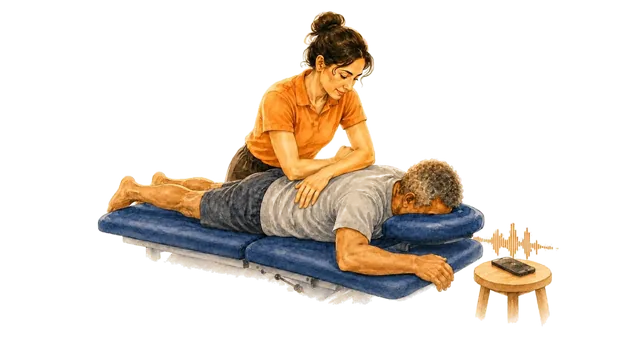
Every detail captured live, in any language, even mid-sentence code-switching.
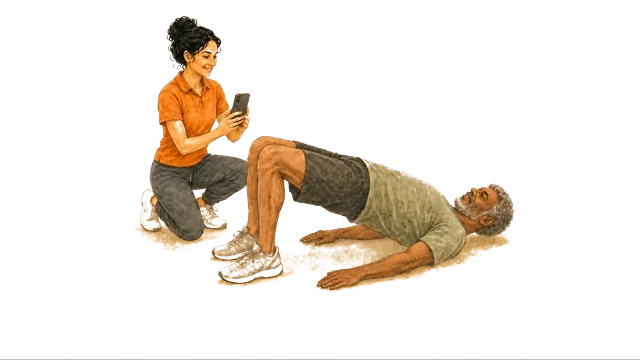
Film the exercises you prescribe and add them to the patient's home programme. You choose the exercises, sets, reps, cues and outcome measures; Hanah helps organise and share your plan.
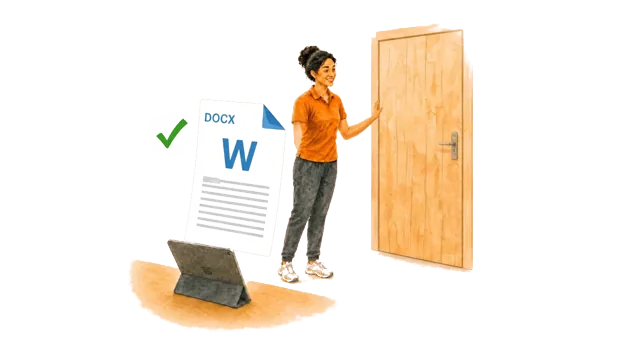
Draft your documents, forms and letters from the findings and decisions you stated, ready for your review.
Informed and kept in the loop, with communication scanned for jargon and explained — an informed patient is an engaged patient!
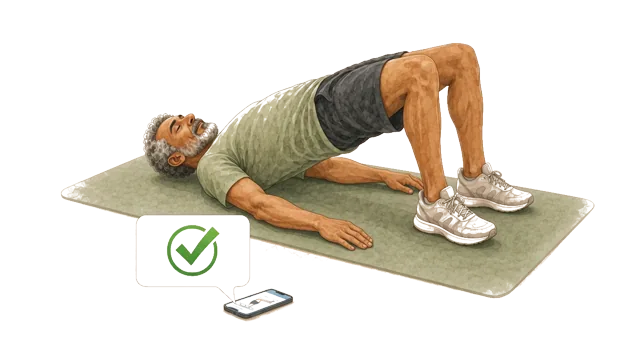
Your clinician recorded subacromial impingementSubacromial impingement — when the tendons in your shoulder get pinched as you lift your arm overhead.. Your agreed plan includes rotator cuffRotator cuff — the group of muscles and tendons that hold your shoulder in place and help you lift and rotate your arm. strengthening, and recheck your range of motionRange of motion — how far you can comfortably move your shoulder in each direction. next visit.
When the plan lives in their pocket, follow-ups get booked, not forgotten — the loop that turns a good visit into a lasting outcome.
Hanah for physiotherapists
Hanah knows your profession from the moment you sign up. Your workspace opens on the notes you already write, in the formats you write them in, and the plans your patients take home. Bring your own templates any time.
Your patient data stays yours.Never used to train our models.
Regional data residency.Patient records are stored in the UK.
Evidence you can inspect. Our accuracy & hallucination report.Built for clinical documentation
Review how we evaluate Hanah, how we handle patient data, and how it fits your team’s work.
Read the methodology, results and limitations.
Review data residency and security information.
See the scribe, patient experience and practice dashboard.
Hanah embeds right into your practice management system in the browser — record on the patient page you already have open, and the finished note lands in that patient's chart. No second tab, no double entry, no migration.
On a different system? Hanah still runs — notes, patient engagement and insights all work standalone while we build your integration. Tell us which system you use →








Built by a clinician who wanted patients to stick to plans, and a game developer who knows what keeps people coming back.
Great care is...
Be present for your patient.
Healing happens between appointments.
Patients with clarity have improved outcomes.
Free/month · no card required
$100 /practitioner/month · AUD /practitioner/month · AUD · billed annually
$250 /month · AUD · tailored to your org /month · AUD · billed annually · tailored to your org
Want the line-by-line on each plan? See full pricing details →
A physiotherapist starts with an initial assessment, a progress note and a discharge summary in SOAP format, plus a referral letter. The Objective section records measurable findings such as range of motion, strength and special tests, one per line with figures and units, and leaves out anything you didn't assess. You can edit these or build your own, such as a vestibular assessment or a return-to-sport plan.
Yes, if you use patient engagement. After the consult, Hanah suggests exercise cards for the patient's care plan from what you prescribed, drawn from the exercise library, and nothing is added until you accept it. You can also add an exercise by hand, from the library or by filming it. Patient engagement is optional; the notes work without it.
Hanah is a platform for modern health practices, and it starts with an AI scribe. The scribe drafts your notes, letters and referrals from the consult, and it runs standalone in your web browser or on iPhone, iPad and Android, with nothing to migrate. It doesn't need a practice management system or the browser extension. If your practice uses Cliniko, Halaxy, Nookal or Zanda, the optional Hanah browser extension puts the scribe inside it and sends each note to the right patient record. Care plans and a patient app that keep patients on plan between visits, and analytics across the practice, are there when you want them. You don't need either to use the scribe.
Yes. Hanah's AI scribe drafts your notes, referrals and care plans from the consult, in your own voice, and it can be the only part of Hanah you use. It runs inside Cliniko, Halaxy, Nookal and Zanda through the browser extension, or standalone if you don't use a practice management system. Patient engagement and practice analytics are in the same account if you want them later, but the scribe doesn't depend on them.
No. Hanah helps you find and summarise information in existing notes and documents, and draft records of the findings, diagnoses and plans you provide. It supports your search for evidence within those materials and your review of the sources; it does not independently diagnose, choose treatment or decide what to investigate next. You assess the evidence, make the clinical decisions and check every draft against its sources.
Yes. Record the consult or dictate afterwards, review the draft, and send the note to your practice management system or keep it in Hanah. You don't have to set up care plans, invite patients or use the analytics, and patients aren't sent anything unless you choose to send it. If you want patient engagement later, it's in the same account, with nothing to move across.
Hanah is built for allied health, GP, and specialist practices — from solo practitioners to multi-clinician groups — and the owners, managers, and clinicians who run them.
Patient records are stored in your region: Australia, New Zealand, the UK or the US. Our data processing agreement lists which regions each step happens in. Bank-level encryption, and no model training on patient data. The regional Trust Centers list the full controls.
About 10 minutes to onboard each clinician. Most practices have the scribe live in week one and patient engagement switched on by week two.
We'll walk through the scribe, the patient app, and the practice dashboard on your actual workflow — not a sandbox.
 Seated band row
 Wall slide
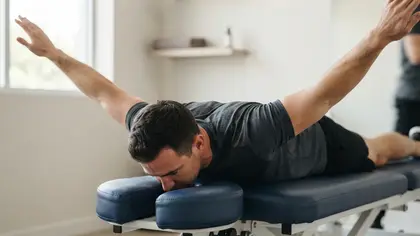 Prone Y raise
 Serratus wall press